One Reform, Two Coffee Economies: Why Tanzania’s Direct-Export Law Is Pulling Its Regions in Opposite Directions
Published 25 September 2026 · Commodities.tz Editorial
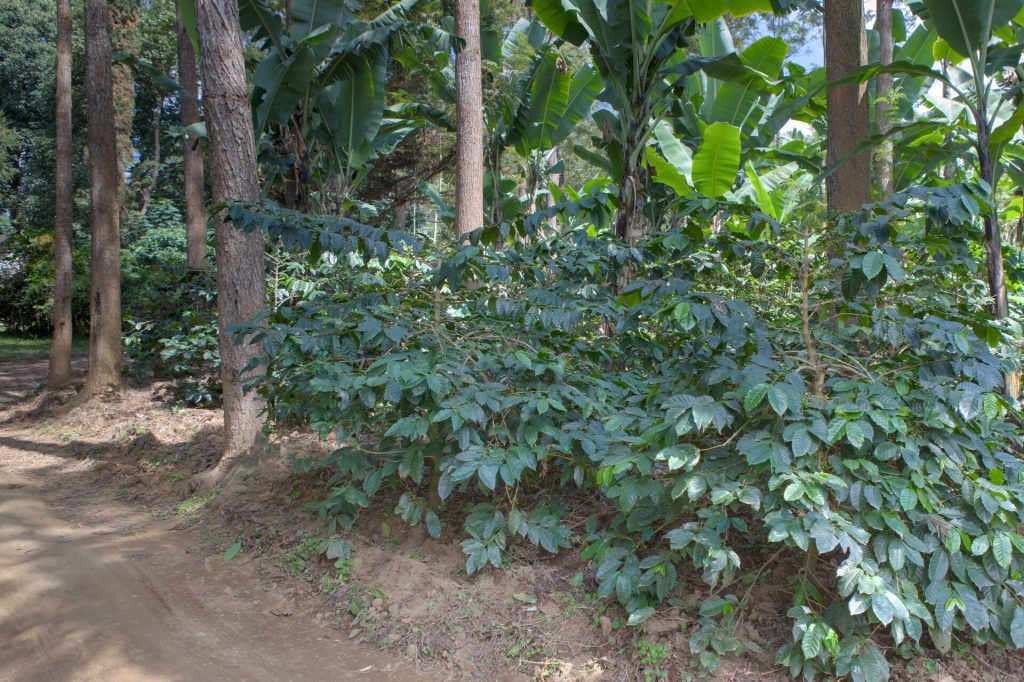
Tanzania's coffee sector is regulated as a single system. One board, the Tanzania Coffee Board (TCB), licenses every exporter and runs the weekly Thursday auction at the Moshi Coffee Exchange, which has operated continuously through a nine-month season since the industry was re-liberalized in the 1990s. One national law, passed in 2021, governs how coffee can legally leave the country outside that auction. And one set of statistics — production forecast at 1.45 million 60-kilogram bags for 2025/26, up from 1.35 million the year before — describes the country as a whole.
But look at what that single policy is actually doing on the ground, and Tanzania stops looking like one coffee origin and starts looking like two, moving in different directions under the same rulebook.
The rule that split the market
Tanzania's coffee regulation has swung hard more than once. Before 1990, the state coffee board and cooperative unions held a marketing monopoly; liberalization in the early 1990s opened buying to private traders; a 2018 regulatory reversal then restricted the purchase of cherry and parchment to registered Agricultural Marketing Cooperative Societies (AMCOS) only, shutting private buyers out of farm-gate purchasing. AMCOS now organize roughly 95% of the country's coffee production, with large private estates in the north accounting for the remaining 5%.
The 2021 reform loosened that system again, but selectively. It allows exporters holding a Direct Export Permit to contract directly with AMCOS and overseas buyers and skip the Moshi auction entirely — provided they guarantee a price above the prevailing auction benchmark, and provided the coffee qualifies as specialty grade. Under the current framework, that means lots scoring 85 points or higher on the cupping scale. That threshold is the hinge the whole story turns on.
Why the highlands and Kagera experience it so differently
An 85-point cupping bar is calibrated for washed, high-elevation Arabica — the coffee grown in Kilimanjaro, Arusha, Iringa, Mbeya, Njombe and Mbinga, where roughly 320,000 smallholders farm an average of 0.63 hectares each, many on trees older than 25 years. This is where the direct-export mechanism has real teeth: it gives an AMCOS or estate producing a genuinely fine lot a legal route to negotiate a price above whatever the auction floor would offer that week, rather than accepting whatever the Thursday auction clears at.
And the auction floor itself shows why that route matters. In the final weeks of the 2024/25 season, market data put Grade AA between $5.84 and $7.60 per kilogram, Grade A between $5.04 and $7.14, and peaberry between $5.00 and $7.34 — with specialty-grade lots commanding a 15–22% premium over standard grades at farm gate. For a smallholder or cooperative sitting on an 85-point lot, that gap between "sold at auction" and "sold direct, above benchmark" is the entire difference the 2021 reform was designed to capture.
Robusta, concentrated almost entirely in Kagera near Lake Victoria, is a structurally different product operating on a different global market — it trades against commodity benchmarks like the ICE London robusta contract rather than specialty-style cupping premiums, and it isn't grown, processed or marketed to chase an 85-point specialty threshold. So while the same 2021 law technically applies nationwide, it offers Kagera producers little practical benefit. What is driving robusta there is a volume story, not a quality story: expansion of planted area in Ngara district, subsidized seedling distribution, and strong standing farm-gate prices pulling new land into production. The result is visible in the national mix itself — Tanzania has historically produced roughly 70% Arabica to 30% Robusta, but the 2025/26 forecast puts the two nearly at parity, 750,000 bags of Arabica against 700,000 of Robusta. Kagera is growing the national numbers; the Highlands are growing the national reputation.
What this means for buyers
The practical upshot is that "Tanzania" as a sourcing category now contains two distinct value propositions operating under one regulatory roof. Buyers chasing traceable, high-scoring lots increasingly deal with exporters holding direct-export permits, negotiating above-auction pricing directly with AMCOS in the Northern and Southern Highlands — a market one export review frames as a "niche specialty origin," Tanzania supplying roughly 0.8% of global production and ranking 15th among producing countries. Buyers sourcing robusta for blends or instant/industrial use are instead watching a commodity expansion story in Kagera, where the relevant variables are seedling subsidies and hectares, not cupping scores.
The auction itself hasn't gone away — it remains the default channel for exporters without a direct-export license, and TCB auction sessions in October 2025 show the mechanism still running at full pace. But its role has narrowed to a specific function: setting the public benchmark price that every direct contract in the specialty segment must now legally beat. Overall exports are projected to rise to 1.37 million bags in 2025/26, up from 1.26 million, with the EU taking more than six times the volume the US imports and remaining Tanzania's largest single market. Underneath that aggregate, though, sits a country whose coffee sector no longer moves as one — it moves as a highlands specialty economy and a lakeside commodity economy, both regulated by the same board, both counted in the same national bag totals, and both reading the same 2021 law in completely different ways.
- Tanzania Coffee Report: Production and Exports Up, Driven by Robusta — https://dailycoffeenews.com/2025/06/11/tanzania-coffee-report-production-and-exports-up-driven-by-robusta/
- Tanzania Coffee Market Report — May 2025 (AGnimble) — https://agnimble.com/tanzania-coffee-market-report-may-2025/
- Tanzania Export Review (Royal Coffee) — https://royalcoffee.com/tanzania-export-review/
- Coffee production in Tanzania (Wikipedia) — https://en.wikipedia.org/wiki/Coffee_production_in_Tanzania
- Tanzania Coffee Farmers and Traders Face Stark New Regulatory Reality, Daily Coffee News (2018) — https://dailycoffeenews.com/2018/05/14/tanzania-coffee-farmers-and-traders-face-stark-new-regulatory-reality/
- A Guide to Tanzanian Coffee Production, Perfect Daily Grind — https://perfectdailygrind.com/2021/10/a-guide-to-tanzanian-coffee-production/
- Tanzania Coffee Board auction bulletin TCB/M/11 — https://www.coffee.go.tz/uploads/documents/sw-1768574446-M11.pdf